

Books authored by the faculty and staff of New Mexico State University. To be included, please submit your book to your department's book collection.





-
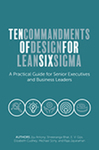
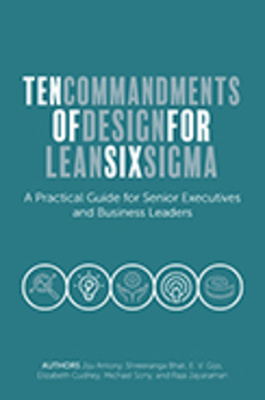
Ten Commandments of Design for Lean Six Sigma: A Practical Guide for Senior Executives and Business Leaders
Jiju Antony, Shreeranga Bhat, E. V. Gijo, Elizabeth Cudney, Michael Sony, and Raja Jayaraman
Design for Lean Six Sigma (DFLSS) is a powerful methodology adopted by many world-class companies today. It aims to build quality into products or services at the very early stages of the product development process. Ten Commandments of Design for Lean Six Sigma brings together the experience of six authors with more than 50 years of cumulative DFLSS deployment in the field.
The book covers key topics such as alignment of DFLSS with organizational strategy; top management support and involvement; listening to the voice of the customers (VOC); effective training programme for right project teams; project selection and prioritization; linking DFLSS with ISO international standards; effective use of DFLSS methodology and the integrated tools within the methodology and reward and recognition schemes.
The practical nature of the book makes this ideal reading for senior executives in all organizations with an interest in developing, implementing, and deploying DFLSS. It will be a great asset to many trainers and consultants who would like to deliver executive courses for senior managers in any organisation.
-
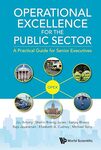
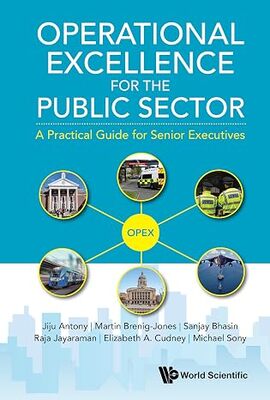
Operational Excellence for the Public Sector: A Practical Guide for Senior Executives
Jiju Antony, Martin Brenig-Jones, Sanjay Bhasin, Raja Jayaraman, Elizabeth A. Cudney, and Michael Sony
This book provides a comprehensive introduction to operational excellence (OPEX) and its potential benefits in the public sector, offering a practical roadmap for preparation, implementation, and long-term sustainability. Through real-world case studies from diverse public sector organisations — including healthcare, law enforcement, higher education, and local government — it illustrates how various OPEX methodologies can drive efficiency and effectiveness.
While many public sector organisations have embraced methodologies like Kaizen and Lean, sustaining OPEX initiatives remains a challenge. Few have fully integrated Lean Six Sigma due to cultural resistance, a lack of formal infrastructure, limited skills and competencies, insufficient visionary and strategic leadership, low awareness of the integrated approach, and limited strategic alignment. Senior management often fails to prioritise OPEX, leaving critical improvement opportunities untapped. This book addresses these challenges, equipping leaders with the knowledge and tools to successfully implement and sustain OPEX in the public sector.
-
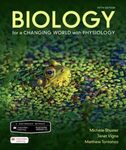
Biology for a Changing World with Physiology, Fifth Edition
Michèle Shuster, Janet Vigna, and Matthew Tontonoz
Biology for a Changing World brings science to life through powerful, real-world stories that make biology relevant, engaging, and unforgettable. Each chapter begins with a compelling narrative—whether it’s the James Webb Space Telescope and the search for extraterrestrial life, how DNA evidence overturned a wrongful conviction, or the science of weight-loss drugs like Ozempic. These stories hook students with context that matters to their lives. Magazine-style visuals, clear infographics, and story-driven learning ensure that students not only understand biology but also see why it matters.
In this new edition, fresh stories and hands-on learning tools deepen engagement. Pre-lecture videos prepare students for class, the new AI study Coach provides personalized practice, and virtual labs and real-world simulations let students experience how science is done. For many, this may be their only science course—so it’s designed to leave them with lasting scientific literacy, critical thinking skills, and the confidence to apply biology in their personal choices and as citizens of a changing world.
-
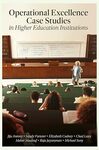
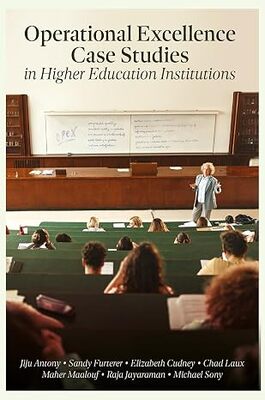
Operational Excellence Case Studies in Higher Education Institutions
Jiju Antony, Michael Sony, Elizabeth A. Cudney, Sandra L. Furterer, Chad Laux, Raja Jayaraman, and Maher Maalouf
Operational Excellence (OPEX) is all about achieving efficiency and effectiveness in business processes of any organization, despite of the nature of the business and size. There are various OPEX methodologies adopted by world class corporations for the past three decades including: Lean, Six Sigma, Lean Six Sigma, Kaizen, and Agile. These methodologies have proved to be very successful in many manufacturing and service companies around the world for over three decades. However, until now, there has been little research on the use of these methodologies in the Higher Education (HE) sector.
In Operational Excellence Case Studies in Higher Education Institutions, the chapters bring together a wide range of real-life, global case studies which highlight critical differences in approach due to varied cultural differences and leadership styles.
This edited collection offers a practical guide for OPEX facilitators in all HE Institutions for developing, implementing, and deploying OPEX or Continuous Improvement initiatives, and is a great asset to many trainers and consultants who would like to deliver executive courses for senior managers in public sector organisations; in particular HE or University sector.
-

Space Brooms!
A.G. Rodriguez
On board Kilgore Station, creatures of all kinds spend their days indulging in exotic cuisine and gambling their credit away on the entertainment deck. Everyone except Johnny. Working as a janitor, or 'space broom', Johnny spends his days elbow-deep in alien excrement, mourning a life of fortune that he originally set out to find. But Johnny's luck turns around when he stumbles across a small data-chit, containing deeply confidential, and highly coveted, information. Johnny then sets off to Earth's moon, Luna, in an effort to sell the chit to the Obinna Crime Syndicate. But as word spreads of Johnny's discovery, the solar system's most nefarious creatures are soon on his tail. With help from his augmented roommate, a pair of smugglers and a mysterious and beautiful stranger, Johnny takes on assassins and mobsters as he ventures towards the biggest payout of his life...
-
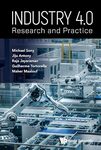
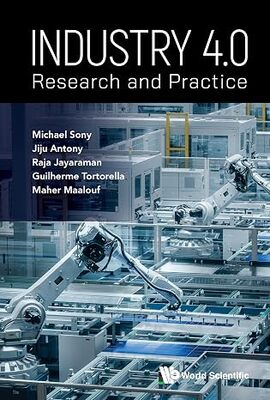
Industry 4.0: Research and Practice
Michael Sony, Jiju Antony, Raja Jayaraman, Guilherme Tortorella, and Maher Maalouf
Industry 4.0: Research and Practice offers a non-technical introduction to the rapidly evolving landscape of the fourth industrial revolution. With advancements in artificial intelligence, big data, cyber-physical systems, and the Internet of Things (IoT), organizations across the world are experiencing a profound digital transformation. This essential guide is tailored to academics, business leaders, and practitioners who are seeking to understand the complexities of Industry 4.0. Through indepth analyses, real-world case studies, and practical frameworks, this book examines the benefits, challenges, and strategic implications of Industry 4.0 technologies in diverse sectors — from manufacturing and healthcare to oil and gas, financial services, and beyond.
Key topics addressed include: the evolution and foundational technologies of Industry 4.0; the pros and cons of organizational digital transformation across different continents and economies; cyber-physical system architecture; the socio-technical implications of Industry 4.0; practical models for assessing organizational readiness; organizational performance among early and late adopters of Industry 4.0; sustainability; and the emerging landscape of Industry 5.0.
Packed with practical insights and global case studies, this volume equips readers with the knowledge to harness cutting-edge technologies, drive innovation, and ensure long-term success in the digital age. Whether you're shaping policy, driving corporate strategy, or conducting academic research, this book is an indispensable resource for understanding and leading the Industry 4.0 era.
-

Projectile Points of New Mexico: 13,000 Years of Technological Innovation
Bradley J. Vierra
For the first time, New Mexico has a volume dedicated to all projectile point types dating from the Paleoindian through Historic period. Filled with historical details, measurements, defining attributes, age estimates, interpretations, references, and images, Projectile Points of New Mexico: 13,000 Years of Technological Innovation edited by Dr. Bradley J. Vierra and with many contributing authors and supporters, is graciously offered here courtesy of the New Mexico Bureau of Land Management, who provided the grant for production costs, New Mexico State University, who was responsible for the contract, and Statistical Research, Inc., who produced the volume. There are two posters also available for download included in the volume that provide an overview of the different projectile point types and some well-known flaked stone raw material source locations.
-

Stone Feather Fang
A.G. Rodriguez
The gods--the cemi--have left the world of Ke', and their lush and verdant Andolin Islands are now inhabited by impious followers. Teenage priestess Hildy Rios is tasked with saving her religion. In a special ritual called the Telling, she must somehow reawaken her people's love of the gods. Her effort is the last hope of her people: after this Telling, there will be no more chances, as the cemi will vanish into the past, their power forever lost to the world of Ke'.The weight of her world on her shoulders, Hildy rewrites the Telling's story--and her own. She weaves a tale of her distant ancestor, a boy named Jenaro, blessed with the ability to see and speak to the cemi; a boy who, though long past, becomes as much a part of the present by way of the Telling's power. For three days, Hildy brings to life the tale of Jenaro and his yearning for adventure, how he is haunted by the cemi of death, and who--like her--is fighting against the shackles of his family and society. For three days, Jenaro becomes real, and the power of the cemi to reach across time should be enough to convince Ke's people, but their impiety runs so deep...Hildy and Jenaro. Two people joined by cursed blood, but separated by centuries of time. Only the cemi know how their tales will end.
-
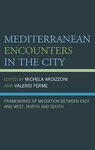
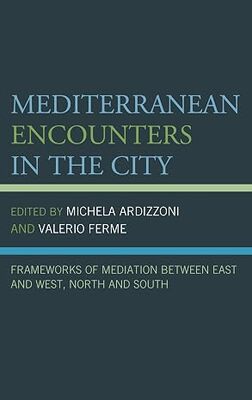
Mediterranean Encounters in the City: Frameworks of Mediation Between East and West, North and South
Michela Ardizzoni and Valerio Ferme
This book documents and analyzes how the contemporary Mediterranean city manages and negotiates its identity as a result of recent reconfigurations in its cultural, religious, and social landscape. The events of Sept. 11, 2001 have recast difference as a central trope of identification in urban borderland settings, unleashing heated debates about cultural convergences and animating anxieties about an arguable clash of civilizations in modern cities. These emerging uncertainties have also grown stronger as the homogenizing forces of globalization unsettle essential principles of the nation-state and nationhood and render fixed perceptions of distinctive and singular people and cultures more tenuous. Recent scholarship and public discourse have accordingly framed discussions of these encounters around concerns of geo-political security and international policy. Unfortunately, framed within these terms, our understanding of how various groups within the Mediterranean metropolis deal with the intensification of difference as a lived experience has remained regrettably thin. This volume transcends this limitation and explores new, interdisciplinary research paradigms that will help us gain a comprehensive perspective on how complex macro and micro tensions, contradictions and similarities are negotiated in building urban identities in the Mediterranean basin.
The contributors to this volume explore the multi-faceted nature of Mediterranean cities and engage a critical discussion of identity production and consumption in the Mediterranean basin. By spanning two centuries and examining both the Northern and Southern shores of the Mediterranean, the chapters in this book provide a broad and comprehensive investigation of the ways in which recent cultural productions have framed and re-imagined the Mediterranean city as a locus of departures, arrivals and contested belonging. By focusing on cinema, photography, new media, magazines, music and literature as different stages for the performative representation of Mediterraneity, the authors highlight the vibrancy of the intercultural discourses taking place along the shores of the mare nostrum and provide new perspectives from which to explore the relationship between North and South, East and West.
-
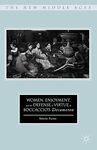
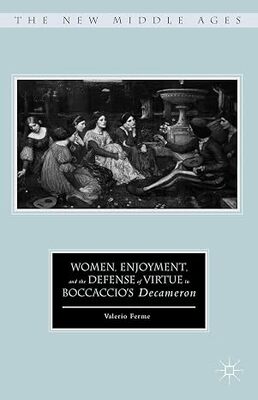
Women, Enjoyment, and the Defense of Virtue in Boccaccio’s Decameron
Valerio Ferme
Providing new ways of reading Boccaccio's masterpiece, Decameron, Ferme analyzes the dynamics between the women who rule the first half of the story. Peeling back the many narrative layers within and outside of the framework, this book unearths the complications and trickery surrounding gender and death in Boccaccio's world and culture.
-
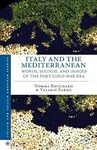
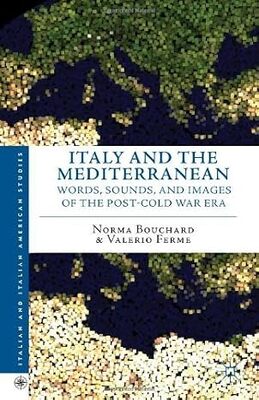
Italy and the Mediterranean: Words, Sounds, and Images of the Post-Cold War Era
Valerio Ferme and Norma Bouchard
The Mediterranean has always loomed large in the history and culture of Italy, and since the 1980s this relationship has been represented in ever more varied forms as both national and regional identities have evolved within a globalized context. This interdisciplinary volume puts Italian artists (writers, musicians, and filmmakers) and intellectuals (philosophers, sociologists, and political scientists) in conversation with each other to explore Italy's Mediterranean identity while questioning the boundaries between Self and Other, and between native and foreign bodies. By moving beyond nation-centric models of cultural and ethnic homogeneity based on myths of progress and rationality, these wide-ranging contributions fashion new ways of belonging that transcend the cultural, economic, religious, and social categories that have characterized post Cold War Italy and Europe.
-
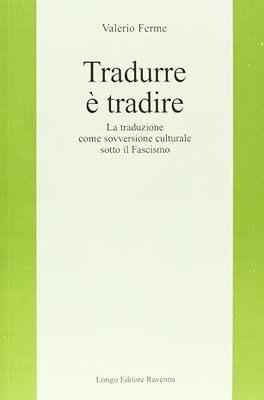
Tradurre è Tradire : la Traduzione come Sovversione Culturale sotto il Fascismo
Valerio Ferme
Title in English: "To Translate is to Betray: Translation as Cultural Subversion under Italian Fascism.”
La traduzione è un’area della letteratura che spesso non riceve l’attenzione che le è dovuta, pur essendo importante nello sviluppo e nell’evoluzione di qualsiasi polisistema linguistico e culturale. Tradurre è tradire la rivaluta, offrendole un contesto che esula da considerazioni prettamente linguistiche, e che la discute invece come agente di trasformazione culturale e ideologica. Prendendo lo spunto da nuovi approcci nel campo dei «cultural studies» anglo-americani, l’autore analizza un periodo della storia letteraria italiana (gli anni Trenta dell’Italia fascista) già famoso per le sue traduzioni come fertile campo di ricerca per nuove intuizioni pertinenti non solo alle traduzioni dei ‘grandi’ traduttori Pavese e Vittorini, ma soprattutto al milieu linguistico e culturale in cui esse si affermarono. Il testo che ne risulta offre una nuova e più approfondita prospettiva sui processi di trasformazione culturale sottintesi al tradurre, e mostra la potenzialità sovversiva che la traduzione dalla letteratura americana ebbe sull’ideologia dominante durante il Ventennio fascista.
-
Diario Italo-Americano, 1989-1996
Valerio Ferme
"Diario Italo-Americano, 1989-1996 – as you can see from the title – is a diary about moving between countries. It is the essence of who I am. I grew up in Italy with people who used to say, “You’re an American” because my mother was American-Italian. When I moved to the United States, I was the Italian. The poetry is mostly about geography and how that geography spurs me to think about myself and my place in the world. While it was published in Italy, there is a section containing poems written in English, which for me highlights the split nature of my identity.'
Description from Dr. Ferme, abstracted from Five questions for Valerio Ferme.